
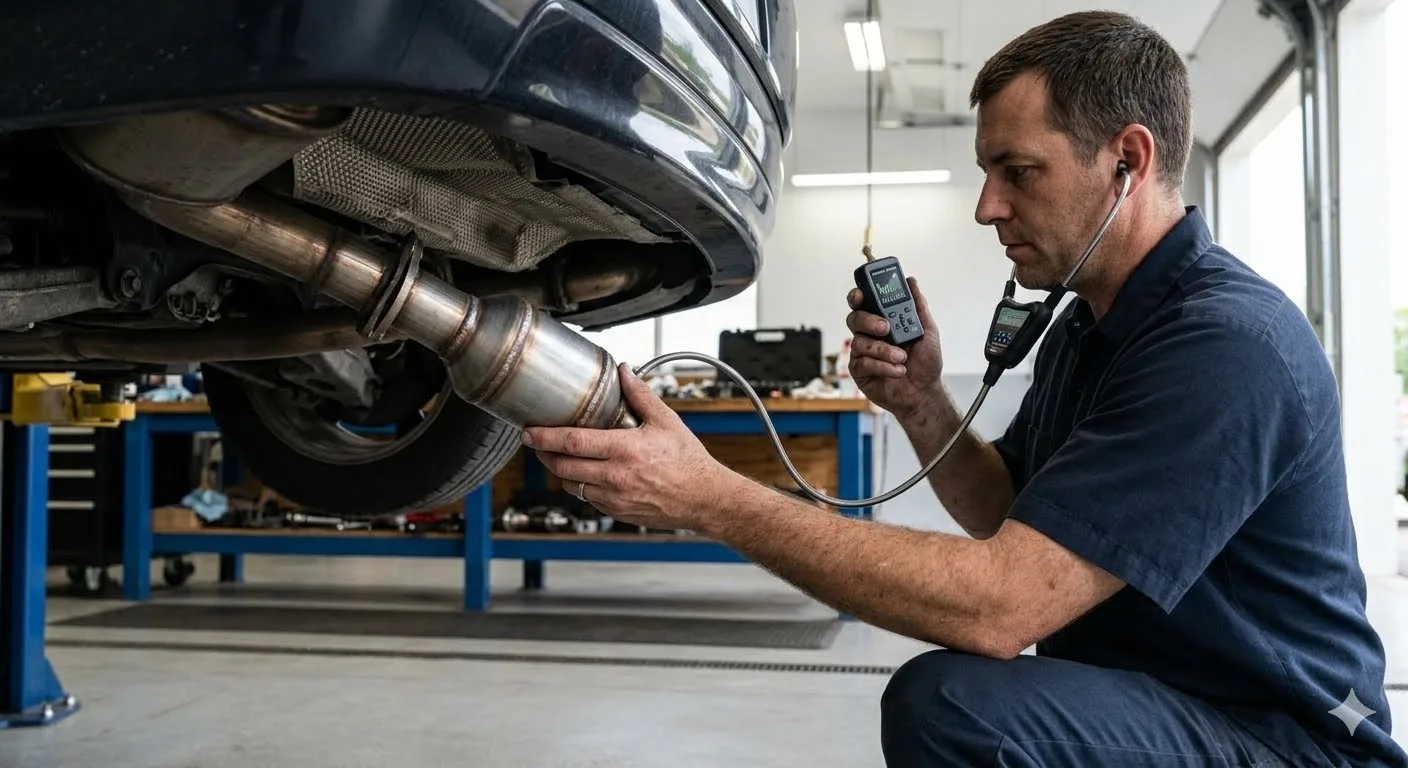
What Does a Bad Catalytic Converter Sound Like?
A failing catalytic converter produces distinctive sounds that can help you diagnose the problem. Understanding catalytic converter sound patterns is one of the easiest DIY diagnostic methods — no tools required, just your ears.
Rattling Sound
The most common and distinctive sound is a metallic rattling or clanking, especially when starting the engine or idling. This occurs when the internal honeycomb substrate has cracked or broken apart. The loose pieces rattle inside the converter housing like marbles in a can. The sound is typically loudest when the engine is cold and may decrease once the converter heats up and the pieces expand.
Hissing or Sputtering
A hissing or sputtering sound from the exhaust area can indicate a cracked converter housing or failed gaskets at the converter connections. These sounds are caused by exhaust gases escaping through gaps before passing through the muffler. The sound is often more noticeable during acceleration and may be accompanied by a visible exhaust leak.
Deep Rumbling
If the internal substrate has completely collapsed or been blown out, you may hear a deep rumbling or droning sound that wasn't present before. This is because the converter is no longer providing any exhaust restriction, effectively making it an empty pipe. While the sound may seem appealing to some, it indicates zero emissions control and will fail any inspection.
Normal vs Abnormal Sounds
Some sounds are normal: a mild ticking during warm-up (thermal expansion), and a subtle whooshing of exhaust gas flow. But any new rattling, hissing, or change in exhaust tone warrants investigation. Park on flat ground, start the engine, and listen carefully from underneath the vehicle. Compare the sound from front (near the converter) to rear (near the muffler) to isolate the source.