
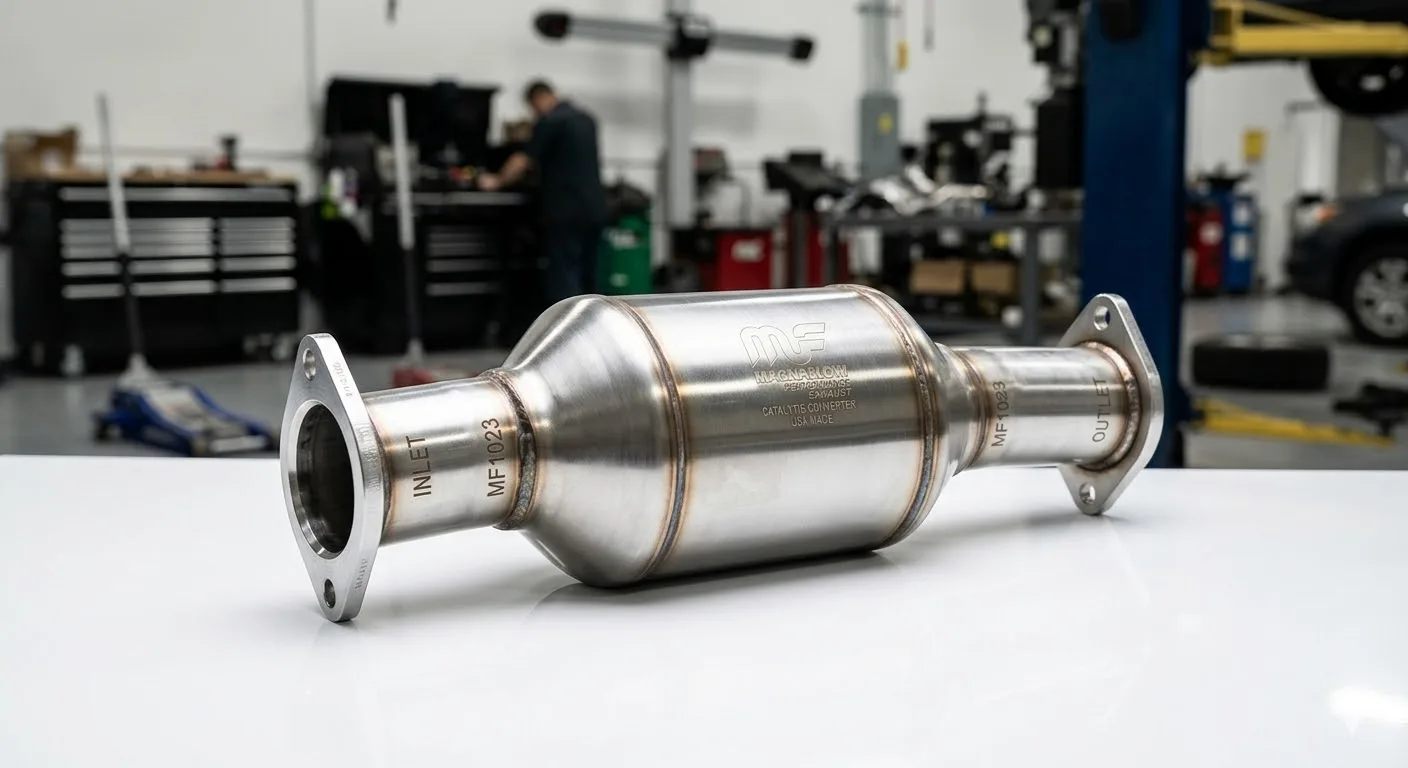
The History of the Catalytic Converter
The catalytic converter is one of the most impactful environmental inventions in automotive history. Its development spans over 70 years, driven by growing awareness of air pollution and increasingly strict emissions regulations.
Timeline
1950: French engineer Eugene Houdry patents the first catalytic converter for gasoline engines, motivated by studying the effects of smog in Los Angeles. 1970: The U.S. Clean Air Act establishes the EPA and sets the first national vehicle emission standards. 1973: The EPA issues regulations that effectively require catalytic converters on all new cars starting in 1975. 1975: The first production vehicles with catalytic converters hit the road. These are two-way (oxidation) catalysts. 1975: Unleaded gasoline becomes widely available — lead destroys the catalyst and was the main reason converters couldn't be used earlier.
1981: Three-way catalytic converters become standard, adding NOx reduction capability. 1990: The Clean Air Act Amendments tighten standards further, driving improvements in converter technology. 2000s: Close-coupled converters (mounted directly to the exhaust manifold) become common for faster light-off. 2010s-2020s: Catalytic converter theft epidemic begins as precious metal prices skyrocket. 2024-2026: New laws in many states require VIN etching and stricter scrap yard purchase records to combat theft.