
What Is a Three Way Catalytic Converter?
A three way catalytic converter (TWC) is the most common type of catalytic converter used in modern gasoline vehicles. The name "three way" refers to the three simultaneous chemical reactions it performs: oxidation of carbon monoxide (CO → CO₂), oxidation of unburned hydrocarbons (HC → CO₂ + H₂O), and reduction of nitrogen oxides (NOx → N₂ + O₂). This triple action makes it the most effective single-unit emissions control device available.
The Chemistry Inside
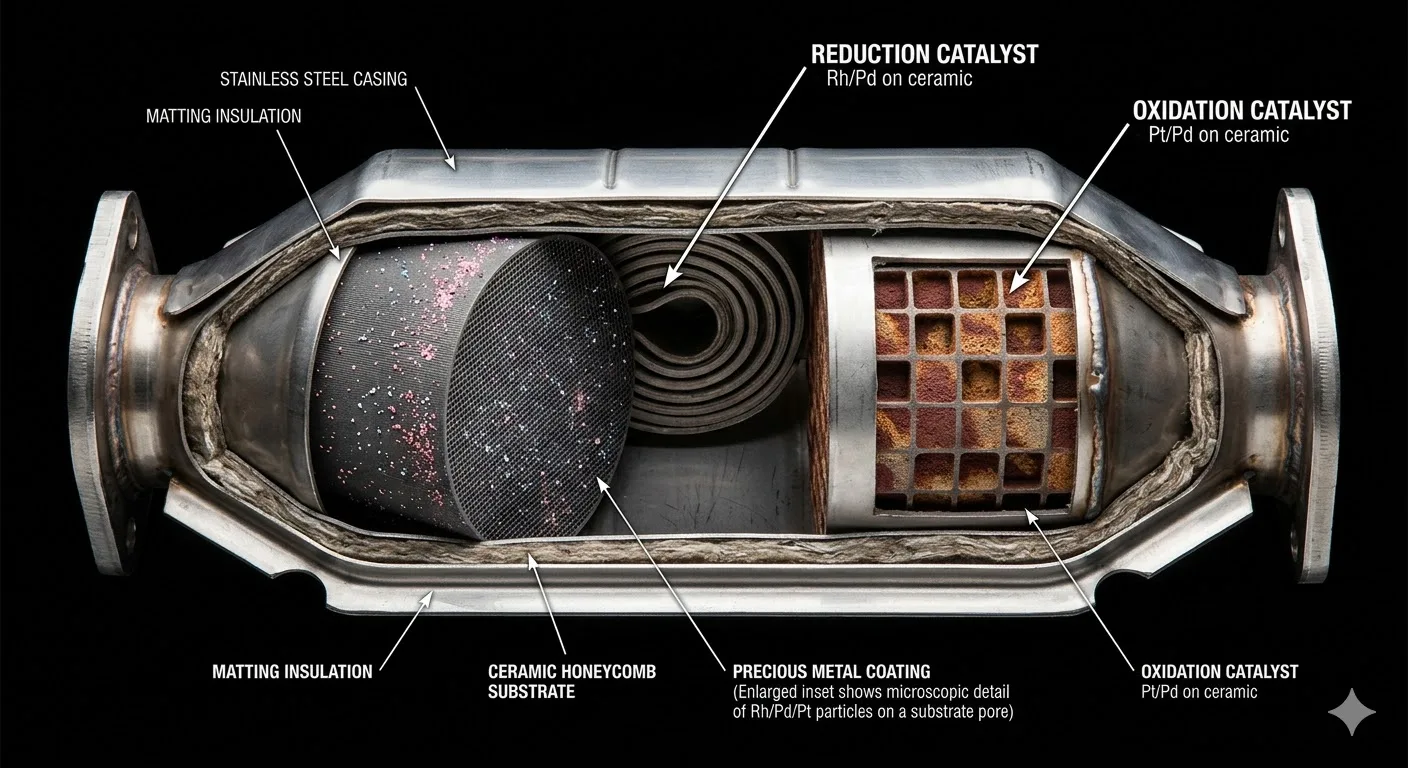
The TWC contains two catalyst beds: a reduction catalyst (using platinum and rhodium) that breaks apart NOx molecules, and an oxidation catalyst (using platinum and palladium) that converts CO and HC into less harmful gases. Both catalysts are coated onto a honeycomb ceramic or metallic substrate with thousands of tiny channels. The enormous surface area — often equivalent to several football fields — maximizes contact between exhaust gases and the catalyst material.
Operating Conditions
Three way converters operate most efficiently at stoichiometric air-fuel ratio (14.7:1 for gasoline engines), which is why modern fuel injection systems use oxygen sensors to maintain precise fuel ratios. The converter must reach its light-off temperature (typically 400-600°F / 200-315°C) before it becomes effective, which is why cold starts produce the most emissions. Most converter damage occurs during cold starts when unburned fuel can reach and overheat the substrate.
Three Way vs Two Way
Older vehicles (pre-1981) used two way catalytic converters that only handled CO and HC oxidation but could not reduce NOx. Three way converters became standard when the EPA tightened NOx regulations. Today, virtually all gasoline vehicles use three way catalytic converters, while diesel vehicles use different technologies including diesel oxidation catalysts (DOC) and selective catalytic reduction (SCR) systems.
Related Guides
Read more about high flow catalytic converter. Read more about mini catalytic converter. Read more about universal catalytic converter. See bad catalytic converter symptoms.
Frequently Asked Questions
Understand three way catalytic converters: the chemistry behind emissions reduction, how they process CO, HC, and NOx simultaneously. Technical guide.
Prices vary from $50 for basic universal models to $600+ for premium direct-fit converters. CARB-compliant variants cost more.
EPA-compliant catalytic converters are legal at the federal level. CARB-compliant converters are legal in all states including California.