
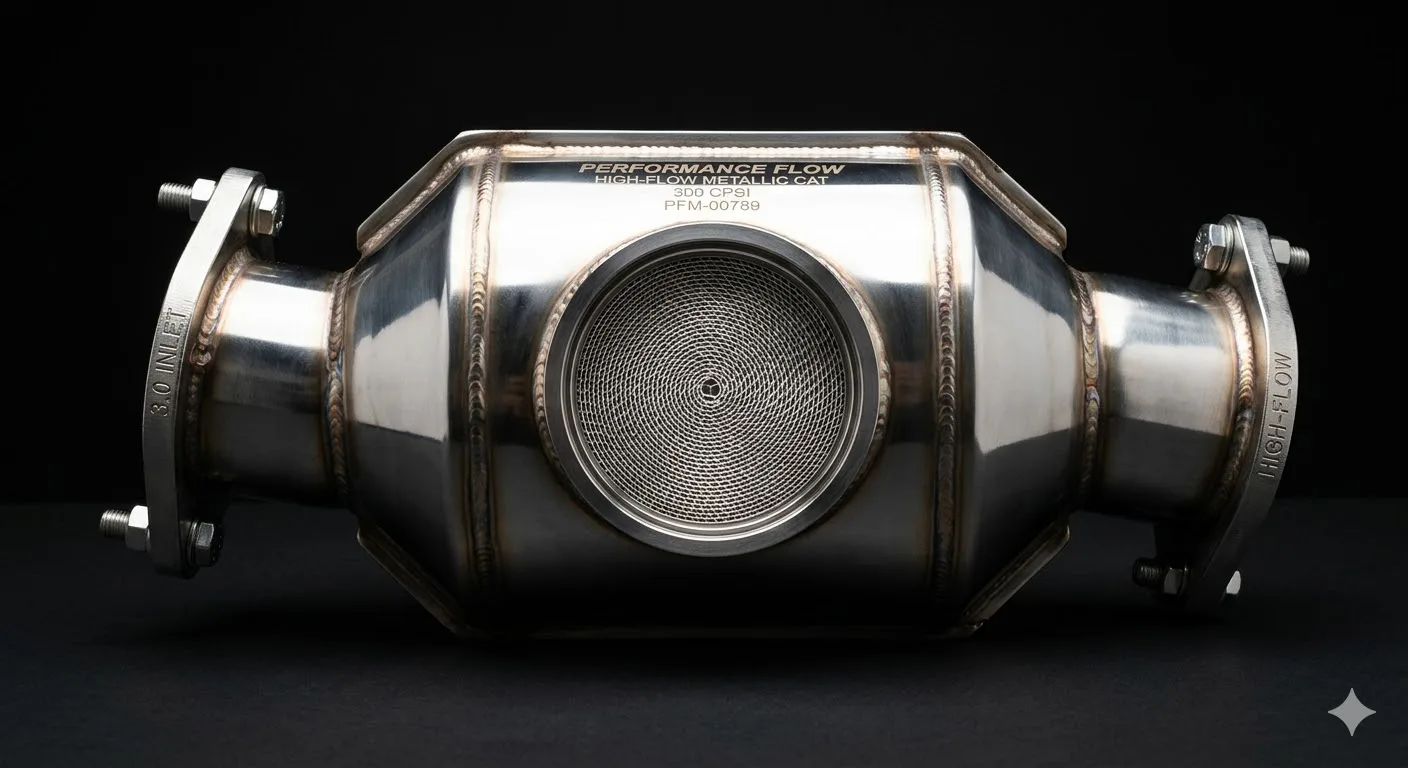
What Is a High Flow Catalytic Converter?
A high flow catalytic converter is an aftermarket performance upgrade designed to reduce exhaust restriction while still meeting emissions standards. Unlike factory catalytic converters that prioritize maximum emissions reduction, high flow cats use a less dense honeycomb substrate and larger cell openings to allow exhaust gases to pass through more freely. This design reduces back pressure, allowing your engine to breathe better and produce more horsepower.
High flow catalytic converters typically use metallic substrates instead of ceramic, which are more durable and resist cracking under high temperatures. The trade-off is slightly higher emissions output — though most quality high flow cats still meet federal emissions standards (EPA-compliant). They are popular in the tuning community for vehicles with turbochargers, superchargers, or engine swaps where the factory converter creates a significant bottleneck.
Performance Benefits
Installing a high flow catalytic converter can yield 5-15 horsepower gains on naturally aspirated engines and 15-40+ horsepower on forced induction setups. The improvement comes from reduced exhaust back pressure, which allows the engine to expel combustion gases more efficiently. This also improves throttle response and can produce a slightly more aggressive exhaust note. When paired with a performance header and cat-back exhaust, a high flow cat completes the exhaust upgrade chain for maximum flow improvement.
Legality by State
High flow catalytic converters exist in a legal gray area. CARB-compliant (California Air Resources Board) high flow cats are legal in all 50 states for street use, but they cost more and have denser substrates. Non-CARB high flow cats are significantly cheaper and flow better, but are technically only legal for off-road or racing use in states that follow CARB standards (California, New York, Colorado, and others). Check your state's specific regulations before purchasing.
Top Brands
The most respected high flow catalytic converter brands include Magnaflow (known for quality construction and CARB compliance), Vibrant Performance (excellent budget option), Catalytic Converter Direct (wide vehicle fitment range), and Eastern Catalytic (OEM-quality replacements). Prices range from $80-150 for universal fit units to $200-600 for vehicle-specific direct-fit options.
Installation Considerations
High flow converters come in two formats: universal fit (requires welding and custom fitment) and direct fit (bolt-on replacement for specific vehicles). Universal fit units are cheaper but require professional installation. Direct fit units are easier to install but cost more. After installation, you may need an ECU tune to prevent check engine lights, as the downstream O2 sensor may detect the higher flow and trigger a P0420 code.
Related Guides
Read more about mini catalytic converter. Read more about universal catalytic converter. Read more about catalytic converter vs muffler. See bad catalytic converter symptoms.
Frequently Asked Questions
Complete guide to high flow catalytic converters. Compare top brands, understand performance gains, legality by state, and installation tips.
Prices vary from $50 for basic universal models to $600+ for premium direct-fit converters. CARB-compliant variants cost more.
EPA-compliant catalytic converters are legal at the federal level. CARB-compliant converters are legal in all states including California.