
How to Tell If Your Catalytic Converter Is Bad
Not sure if your catalytic converter is the problem? This step-by-step guide explains how to tell if catalytic converter is bad using both DIY methods and professional diagnostics. Whether you're an experienced home mechanic or a first-time car owner, these techniques will help you confirm or rule out catalytic converter failure.
Step 1: Check for Warning Signs
Start by noting any symptoms: check engine light, rotten egg smell, reduced power, poor fuel economy, rattling sounds, or failed emissions test. The more symptoms you observe, the more likely your converter is the issue. bad catalytic converter symptoms
Step 2: Read OBD-II Codes
Use an OBD-II scanner (available for $20-50 at auto parts stores or free at many chains like AutoZone). Look specifically for P0420 or P0430 codes, which indicate catalyst efficiency below threshold. While other codes may be present, these two directly point to the catalytic converter.
Step 3: Perform the Exhaust Flow Test
With the engine running, hold your hand 4-6 inches from the tailpipe. You should feel strong, rhythmic pulses of exhaust. If the flow feels weak, steady, or barely noticeable, your converter may be clogged. Caution: Do not touch the tailpipe or get too close — exhaust gases are hot and toxic. clogged catalytic converter symptoms
Step 4: The Temperature Test
Using an infrared thermometer, measure the temperature at the converter's inlet pipe and outlet pipe. A functioning converter should show a 20-50°F increase from inlet to outlet (because the catalytic reaction generates heat). If the outlet is cooler than the inlet, the converter is not functioning. If the inlet is extremely hot and the outlet shows no temperature rise, the converter may be clogged.
Step 5: Visual Inspection
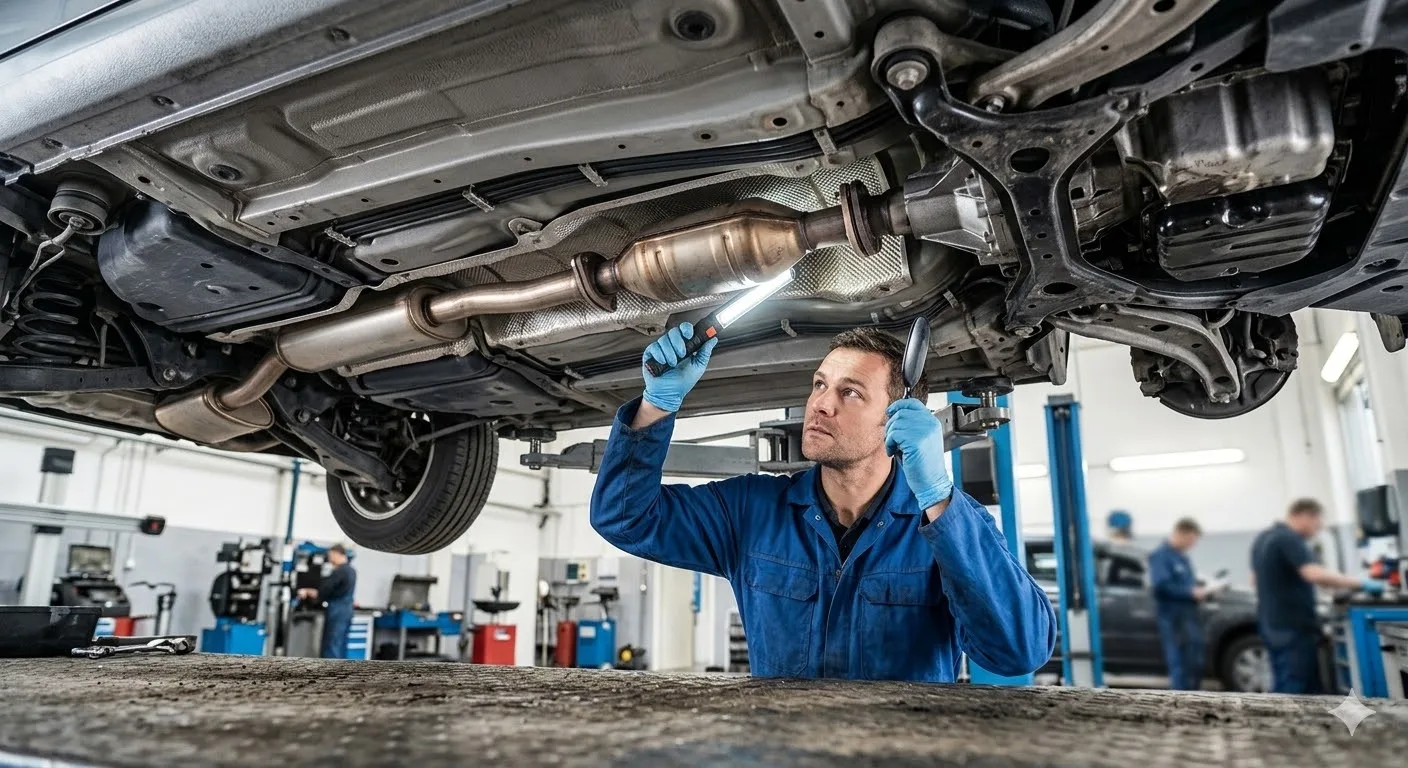
Get under the vehicle (safely supported on jack stands) and visually inspect the converter. Look for dents, rust holes, physical damage, discoloration from overheating (a bluish or rainbow tint), and loose heat shields. Tap the converter gently with a rubber mallet — a rattling sound indicates broken internal substrate. defective catalytic converter symptoms
Step 6: Professional Back-Pressure Test
If your DIY tests are inconclusive, a mechanic can perform a back-pressure test by removing the upstream O2 sensor and inserting a gauge. Normal back pressure is under 1.5 PSI at idle. Readings above 3 PSI confirm a blocked converter. This test costs $50-100 at most shops and provides definitive results.
Related Search Terms
This guide also covers: how do you know if catalytic converter is bad, how to check catalytic converter, testing catalytic converter. All these terms describe variations of the same catalytic converter problem. Whether you searched for "how to tell if catalytic converter is bad" or "how do you know if catalytic converter is bad," the symptoms and solutions are the same.
Frequently Asked Questions
Step-by-step guide on how to tell if your catalytic converter is bad. DIY tests, OBD-II codes, and professional diagnostic methods explained.
Catalytic converter replacement typically costs between $500 and $2,500 depending on your vehicle make and model. Some vehicles with multiple converters may cost more.
While you can technically drive short distances with a bad catalytic converter, it is not recommended. A failing converter can cause engine damage, increase emissions, and may be illegal in many states.