
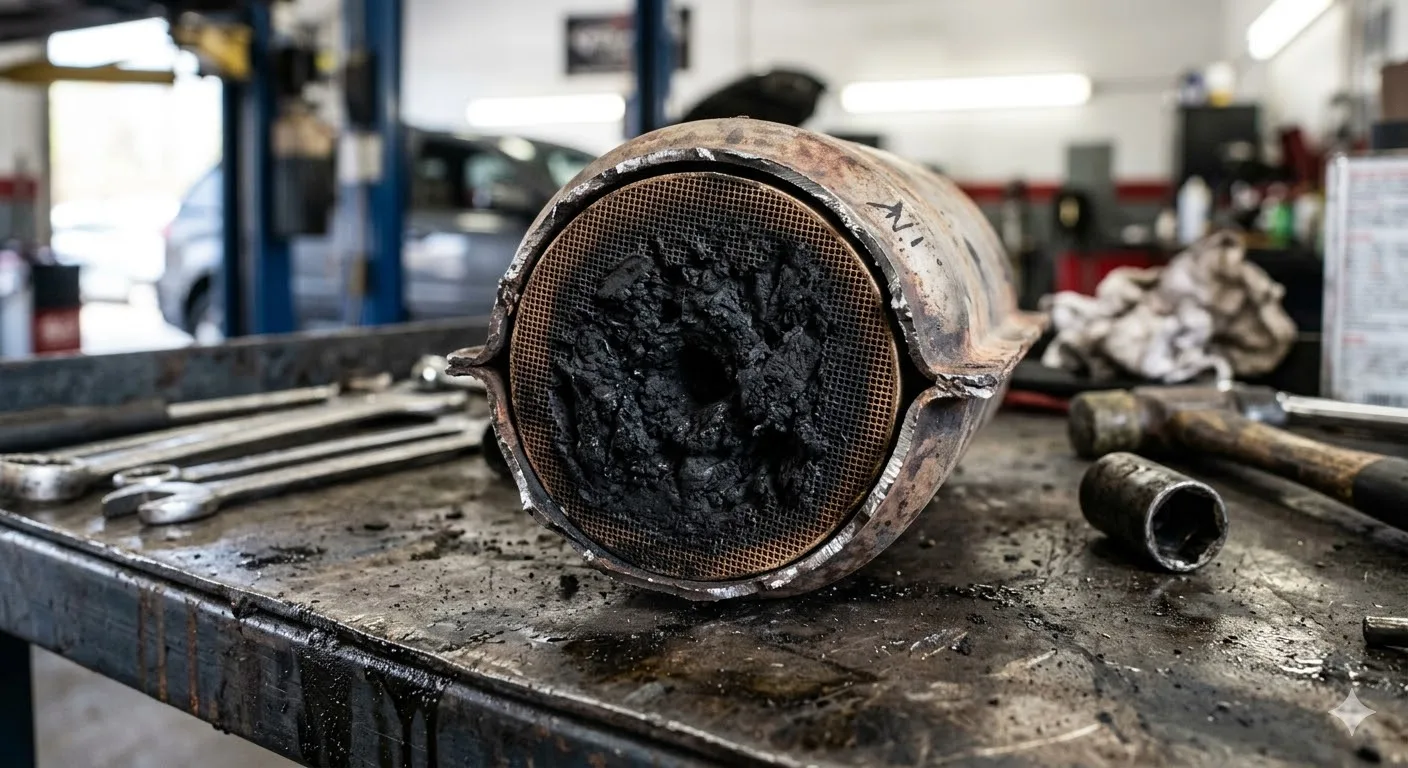
How to Identify a Clogged Catalytic Converter
A clogged catalytic converter is a serious mechanical issue that can significantly impact your vehicle's performance and safety. Unlike a converter that has simply degraded, a clogged converter physically blocks the flow of exhaust gases, creating excessive back pressure that can damage your engine. Understanding clogged catalytic converter symptoms is crucial for timely diagnosis and repair.
Primary Symptoms of a Clogged Catalytic Converter
Loss of engine power is the hallmark symptom of a clogged converter. As the blockage builds, your engine cannot expel exhaust gases efficiently, leading to a noticeable decrease in acceleration and overall performance. You may feel the car "choking" or struggling, particularly at higher speeds or under load.
Engine overheating can occur when exhaust gases are trapped in the engine due to a severely blocked converter. The trapped heat radiates back into the engine compartment, raising coolant temperatures and potentially causing overheating. If your temperature gauge climbs abnormally, a clogged converter could be responsible.
A strong exhaust smell inside the car is another telltale sign. When exhaust cannot exit properly through the tailpipe, fumes can find alternative escape routes, including through gaskets and seals, potentially entering the cabin. This is not only unpleasant but dangerous due to carbon monoxide exposure. bad catalytic converter symptoms
Testing for a Clogged Converter
Mechanics commonly use a back-pressure test to diagnose a clogged catalytic converter. By removing the upstream oxygen sensor and inserting a pressure gauge, they can measure the exhaust back pressure. Normal readings are typically under 1.5 PSI at idle; readings above 3 PSI indicate a significant blockage. A vacuum gauge test can also reveal restricted exhaust flow — steady vacuum at idle that drops significantly under acceleration suggests a clogged converter.
Another effective diagnostic method involves using an infrared thermometer to measure temperature at the converter's inlet and outlet. A healthy converter should show a higher temperature at the outlet (since the catalytic reaction generates heat). If the outlet is cooler or significantly hotter than expected, it may indicate a blockage or internal failure. defective catalytic converter symptoms
Can You Unclog a Catalytic Converter?
In some cases, a partially clogged converter can be cleaned using catalytic converter cleaner additives that are poured into the fuel tank. These products contain chemicals that help break down carbon deposits and other buildup. However, if the honeycomb substrate has physically collapsed or melted, no cleaner will fix it — complete replacement is necessary. blocked cat converter symptoms
What Causes a Catalytic Converter to Clog?
Common causes include engine misfires sending unburned fuel into the converter (which can melt the substrate), oil or coolant leaks contaminating the catalyst material, excessive short trips that don't allow the converter to reach operating temperature, and the use of leaded fuel. Regular engine maintenance is the best prevention against clogging.
Related Search Terms
This guide also covers: blocked catalytic converter, plugged catalytic converter, restricted catalytic converter, obstructed cat converter. All these terms describe variations of the same catalytic converter problem. Whether you searched for "clogged catalytic converter symptoms" or "blocked catalytic converter," the symptoms and solutions are the same.
Frequently Asked Questions
Identify clogged catalytic converter symptoms: reduced power, poor fuel economy, overheating, check engine light. Learn how to diagnose and fix a blocked converter.
Catalytic converter replacement typically costs between $500 and $2,500 depending on your vehicle make and model. Some vehicles with multiple converters may cost more.
While you can technically drive short distances with a bad catalytic converter, it is not recommended. A failing converter can cause engine damage, increase emissions, and may be illegal in many states.